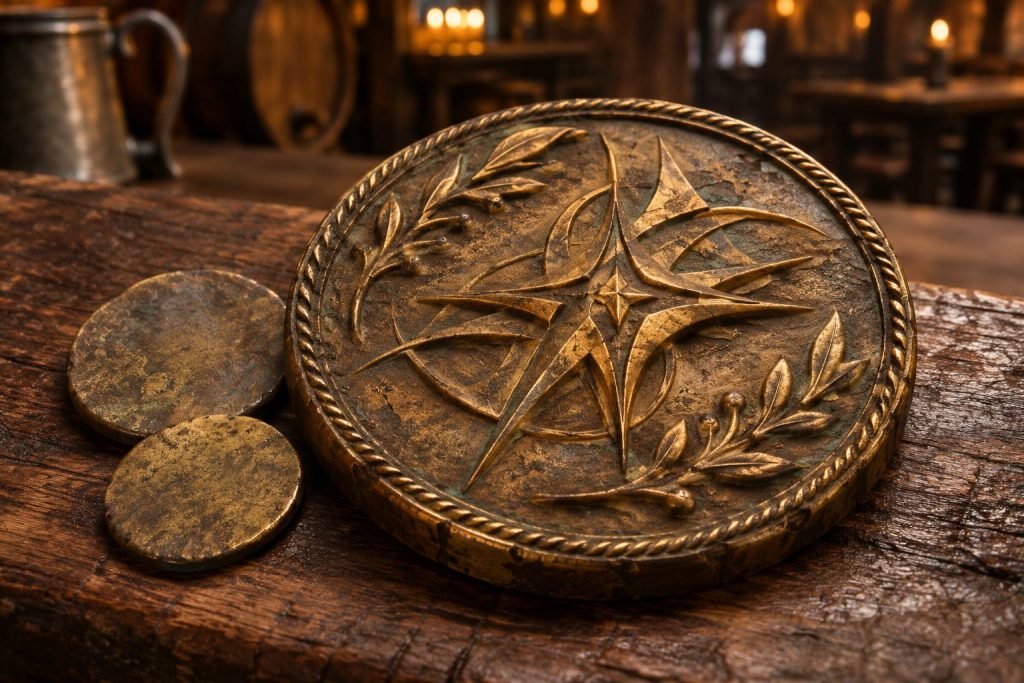
A challenge coin is a small coin or medallion with a unit, branch or organization emblem that shows membership, marks an achievement or says thank you. In the U.S. military, leaders give challenge coins to honor service members, and service members carry them, trade them and display them at home. The name comes from the “coin check,” a challenge to show your coin on the spot. This guide covers what a challenge coin means, where the tradition started, how a coin check works and how to give a coin to a veteran.
What does a challenge coin mean?
A challenge coin means that the person holding it belongs to a group or earned recognition from it. Coins mark membership in a unit, a mission, an anniversary, a meeting with a leader or a job well done, and they stand for loyalty, respect and camaraderie, according to the Wounded Warrior Project. For many veterans, a coin given by a commander means more than its metal is worth.
Where did challenge coins come from?
Nobody knows for certain where challenge coins began, but the most told story dates to World War I. In that account, a wealthy Army lieutenant had bronze medallions struck with his flying squadron’s insignia and gave one to each of his men. After he was shot down and captured, he escaped and reached French lines, where the medallion’s insignia proved who he was. His squadron then made carrying the coin a rule. The story has never been verified, but the practice spread through every U.S. military branch and later to police, fire departments and other organizations.
What is a coin check?
A coin check is a challenge in which one person shows or taps their coin, and everyone else in the group must produce their own coin. Anyone who cannot show a coin traditionally buys a round of drinks; if everyone has one, the challenger buys. Units set their own rules, such as how far from your body the coin may be, so the coin check is a tradition of camaraderie rather than a fixed rulebook.
How is a challenge coin given?
A challenge coin is traditionally given in a handshake: the giver holds the coin in their palm and passes it during the handshake, so the exchange is personal and quiet. Leaders often present coins this way to thank a service member for strong work, and veterans trade coins the same way at reunions. After the handshake, most people keep the coin on a desk, in a display case or in a pocket.
Can civilians give or own challenge coins?
Yes, civilians can buy, own and give challenge coins. Branch and commemorative coins are sold as gifts, and organizations make coins for their own members. One distinction matters: a coin bought as a gift is a token of thanks, while a unit coin presented by a commander marks something the service member earned. When you give a veteran a coin, present it as a thank-you, not as an award.
How do you display challenge coins?
Most veterans display challenge coins in 3 ways: a coin rack or stand on a desk, a shadow box with medals and photos, or a display case beside a folded flag. Keep coins out of humid rooms and handle them by the edges to avoid fingerprints on the enamel. Families who display a burial flag often set the veteran’s coins next to it; see how to display a burial flag.
Is a challenge coin a good gift for a veteran?
A challenge coin is a good gift for a veteran when it matches their branch and comes with a few words about why you are thankful. It is small, easy to mail and fits the military tradition of giving coins as thanks. The Muster USA Navy Veteran Challenge Coin carries Navy artwork; for other branches, see our full guide to gifts for veterans by branch.